
2026-09-04 ·
Choosing Gutter Materials for Humid DC Summers
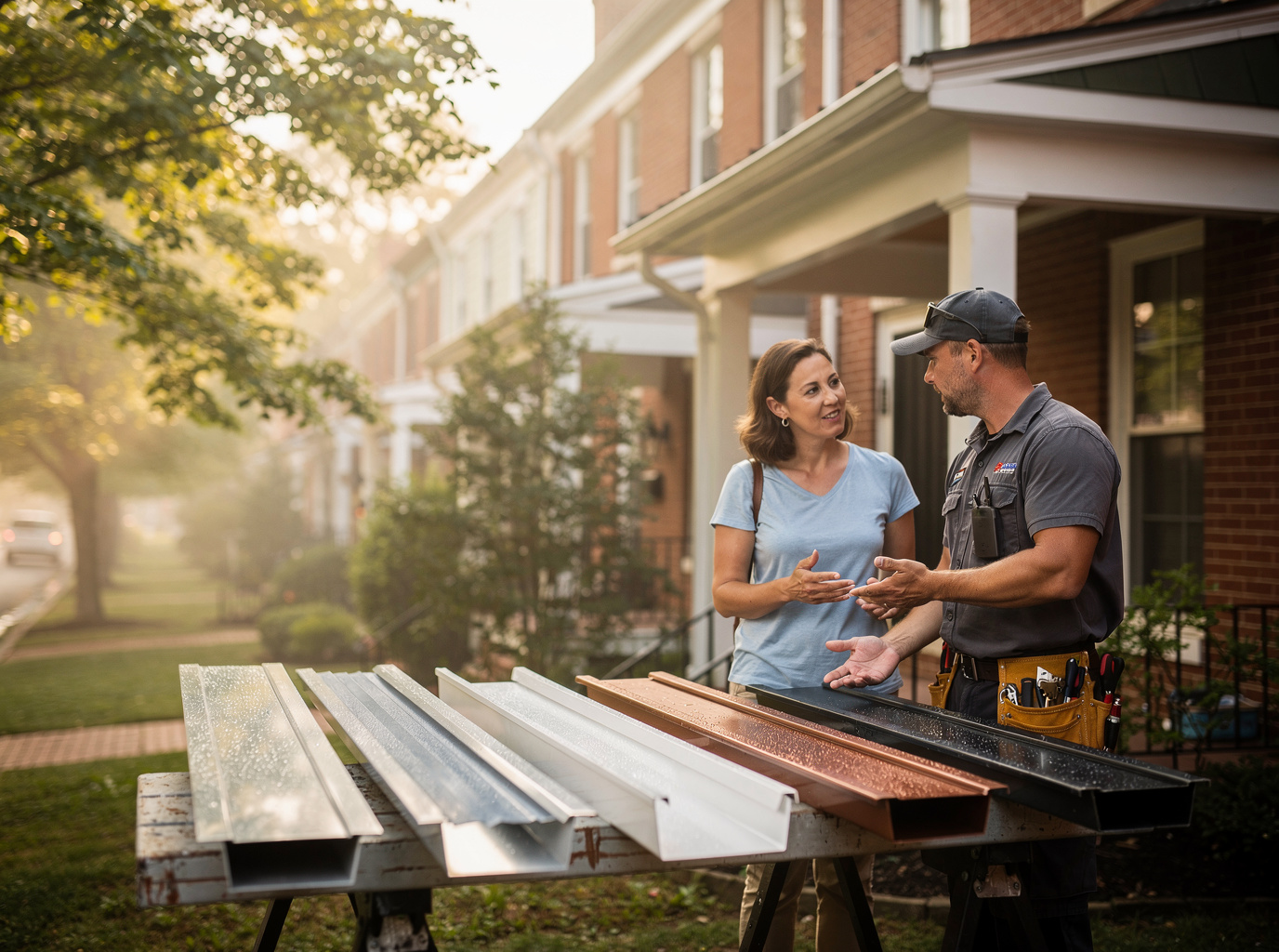
In humid DC summers aluminum and copper gutters resist corrosion and moisture damage better than vinyl or steel. Washington summers bring frequent thunderstorms and high humidity that accelerate rust on ferrous metals and cause vinyl to warp or crack under UV exposure. Aluminum forms a natural oxide layer that protects against pitting while copper develops a stable patina that seals the surface. Homeowners in neighborhoods such as Capitol Hill and Georgetown see these differences play out on older row houses where seams and joints stay wet for days after storms.
Aluminum Performance in DC Humidity
Aluminum gutters handle the combination of heat, rain, and humidity common along the Potomac corridor without rusting. The material expands and contracts less than steel during temperature swings between 70 °F nights and 90 °F afternoons, reducing stress at fasteners and joints. Local installers often recommend 0.032-inch aluminum for standard residential runs and 0.040-inch on longer stretches where water volume increases after heavy downpours. Because aluminum does not require painting, it maintains consistent performance even when pollen and organic debris collect during the growing season. Proper slope and oversized outlets further reduce standing water that can stain fascia boards on Columbia Heights and Petworth properties.
Copper Longevity in Humid Conditions
Copper gutters provide 50–70 years of service in DC’s wet summers when installed with correct soldering and expansion joints. The metal’s natural patina forms within the first two years and protects against the constant moisture that reaches 70–80 % relative humidity on many summer evenings. Homeowners on historic blocks in Georgetown and Cleveland Park choose copper because it matches the aesthetic of older architecture while resisting the algae and mildew that thrive on less durable surfaces. Although initial cost runs higher, the absence of painting or coating maintenance offsets the premium over time. Copper also handles the slightly acidic rainwater common near the Potomac without pitting when seams are properly sealed.
Materials to Avoid in Humid DC Summers
Vinyl and steel gutters show accelerated wear under repeated summer storms and high humidity. Vinyl softens and sags when daytime highs exceed 85 °F for consecutive days, allowing water to spill over edges and saturate soffits. Steel develops rust at any scratch or cut edge within one season when humidity remains elevated. Both materials require more frequent inspections after the intense rainfall events that move through the Washington area each July and August. Switching to aluminum or copper eliminates these recurring issues on homes throughout Shaw and Logan Circle.
Practical Selection Steps for Washington Homeowners
Measure roof pitch and expected water volume before selecting gauge and profile. Check existing fascia condition because humid summers increase the chance of rot behind gutters that leak at joints. Review manufacturer warranties for corrosion resistance rather than relying on generic claims. Pair new gutters with guards to limit debris that holds moisture against the material surface. Readers planning replacements can review details on aluminium gutters and copper gutters or consult the guide to inspecting gutters after summer storms near the Potomac for post-installation checks.