
2026-09-04 ·
Winter Ice Dam Prevention for Row Houses in Washington DC
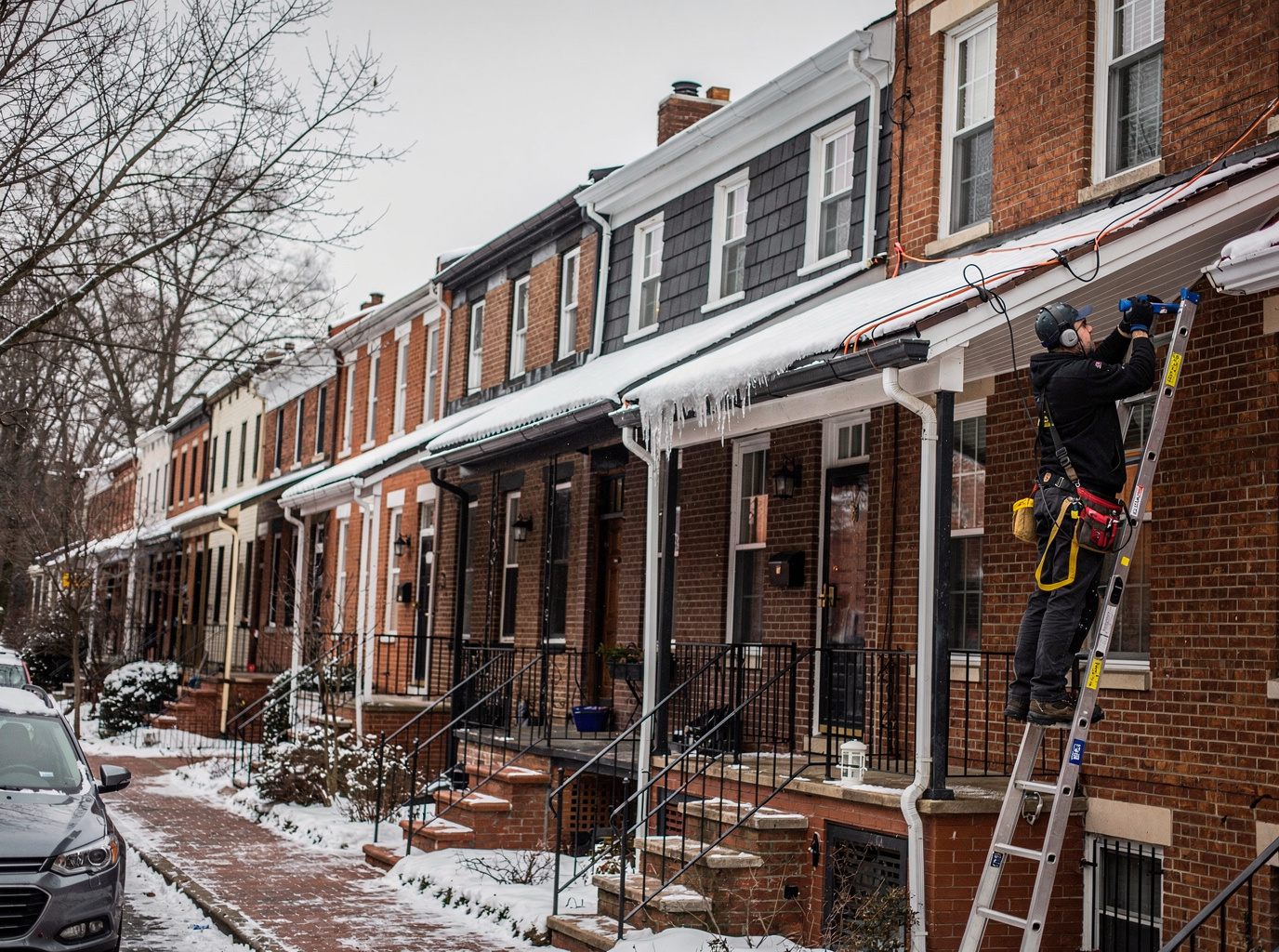
Preventing ice dams on row houses in Washington DC requires addressing heat loss at the eaves combined with reliable gutter flow before the first hard freeze. In neighborhoods like Capitol Hill and Georgetown, where 19th- and early 20th-century row houses dominate, narrow roof pitches and shared walls trap heat unevenly and allow meltwater to refreeze at the gutter line.
Ice Dam Formation in DC Row House Construction
Row houses along Georgia Ave NW and nearby blocks often feature limited attic space and minimal insulation at the roof edge. When interior heat escapes through these older structures, snow on the roof melts and runs down until it hits the colder gutter zone. The freeze-thaw cycles typical of Washington winters then create dams that force water under shingles and into brick walls. Owners in Columbia Heights and Mount Pleasant see this pattern repeat every season because the tight spacing between houses reduces natural airflow along the eaves. Checking for sagging or separated sections before December helps identify where meltwater will pool first.
Gutter Sizing and Flow for Freeze-Thaw Conditions
Standard 5-inch gutters on many DC row houses cannot handle the sudden volume released during a January thaw. Switching to 6-inch K-style gutters improves capacity without altering the historic appearance required in many blocks. Seamless construction eliminates the joints that leak when ice expands, and downspouts placed every 20–25 feet keep water moving away from foundations before it refreezes. In Petworth and Brookland, where lots slope toward the street, directing downspouts into existing yard drains prevents ice sheets from forming on sidewalks. Regular flow testing after installation confirms the system handles the rapid runoff common during DC's variable winter weather.
Heat Cables and Insulation Tie-Ins
Self-regulating heat cables installed along the first 3–4 feet of roof edge and inside the gutter keep channels open during sub-freezing nights. Pairing cables with targeted attic insulation at the eaves reduces the temperature differential that starts the melt-refreeze cycle. Homeowners in Logan Circle and Shaw often combine these steps with gutter guards to keep debris from blocking warmed sections. The cables draw minimal power and activate only when needed, making them practical for the shorter but intense cold snaps Washington experiences. Professional installation ensures the cables follow the exact roofline contours found on narrow row-house lots.
Seasonal Maintenance Schedule
Schedule a thorough cleaning in late October to remove leaves that trap moisture and accelerate ice formation. Inspect seams, hangers, and downspout connections again in early December before sustained freezes arrive. In Shaw and Dupont Circle, where mature trees line many streets, extra attention to guard screens prevents clogs that turn small snow loads into dam problems. Documenting any standing water after the first rain helps prioritize sections for repair before winter locks in. Consistent attention to these dates keeps water moving even when daytime highs reach 45 degrees and nights drop below freezing.
When Replacement Becomes the Practical Step
If existing gutters show repeated separation or corrosion along the fascia, full gutter replacement restores proper pitch and capacity faster than repeated repairs. New aluminum sections sized for DC row-house roofs integrate with existing copper or steel elements while meeting current flow standards. Owners in Cleveland Park and Woodley Park often time replacement for early fall so the system is ready before the first measurable snow. This approach avoids the mid-winter emergency calls that occur when dams form on undersized or misaligned runs. The result is fewer interior leaks and less risk to the brick and mortar that defines Washington row-house neighborhoods.